The AVxLink Dispatch
← All researchSelf-driving isn't self-servicing
Tesla's robotaxi rollout is moving quickly. What happens when thousands of independently owned vehicles need somewhere to go?
By Andy Shelley -
Issue #1 | October 2026
Self-driving isn't self-servicing.
Tesla's robotaxi rollout is moving quickly. The question we're interested in isn't just how many Cybercabs Tesla can put on the road. It's what happens when thousands of independently owned vehicles need somewhere to go when they're not carrying passengers.
That's the problem we're working on at AVxLink.
300+ Cybercabs in Austin. Dallas next.
Tesla launched its Austin robotaxi service in 2025 using Model Ys. In September 2026, it began adding the purpose-built Cybercab, a two-seat autonomous vehicle without a steering wheel or pedals.
On October 10, Tesla's Robotaxi account reported more than 300 Cybercabs serving Austin, an eightfold increase in 30 days. Tesla's Ashok Elluswamy followed with two words: "Dallas soon."
Those are interesting numbers, but here's what caught our attention.
Tesla currently owns and services its own robotaxi fleet. It has the facilities, charging infrastructure, personnel and systems to keep those vehicles operating.
Independent fleet owners won't necessarily have those advantages.
And Tesla is already collecting interest from prospective fleet buyers.
The infrastructure question
Tesla opened a Cybercab fleet-purchasing interest form in September. We still don't know the vehicle price, purchasing requirements, revenue split or exactly when independent owners will be able to operate on the network.
There's plenty of speculation. Not many firm answers.
But one thing seems fairly certain: whether someone owns five Cybercabs or 500, those vehicles will need services.
Cleaning. Charging. Tires. Glass. Inspections. Maintenance. Parking.
And behind all of that, the less glamorous work of permits, insurance, licensing, registrations and renewals.
Tesla's interest form even includes a category for "mobility hubs and infrastructure."
We don't know exactly what Tesla has in mind there, but we're paying attention. And yes, we've put our name on that list.
Why we changed our model
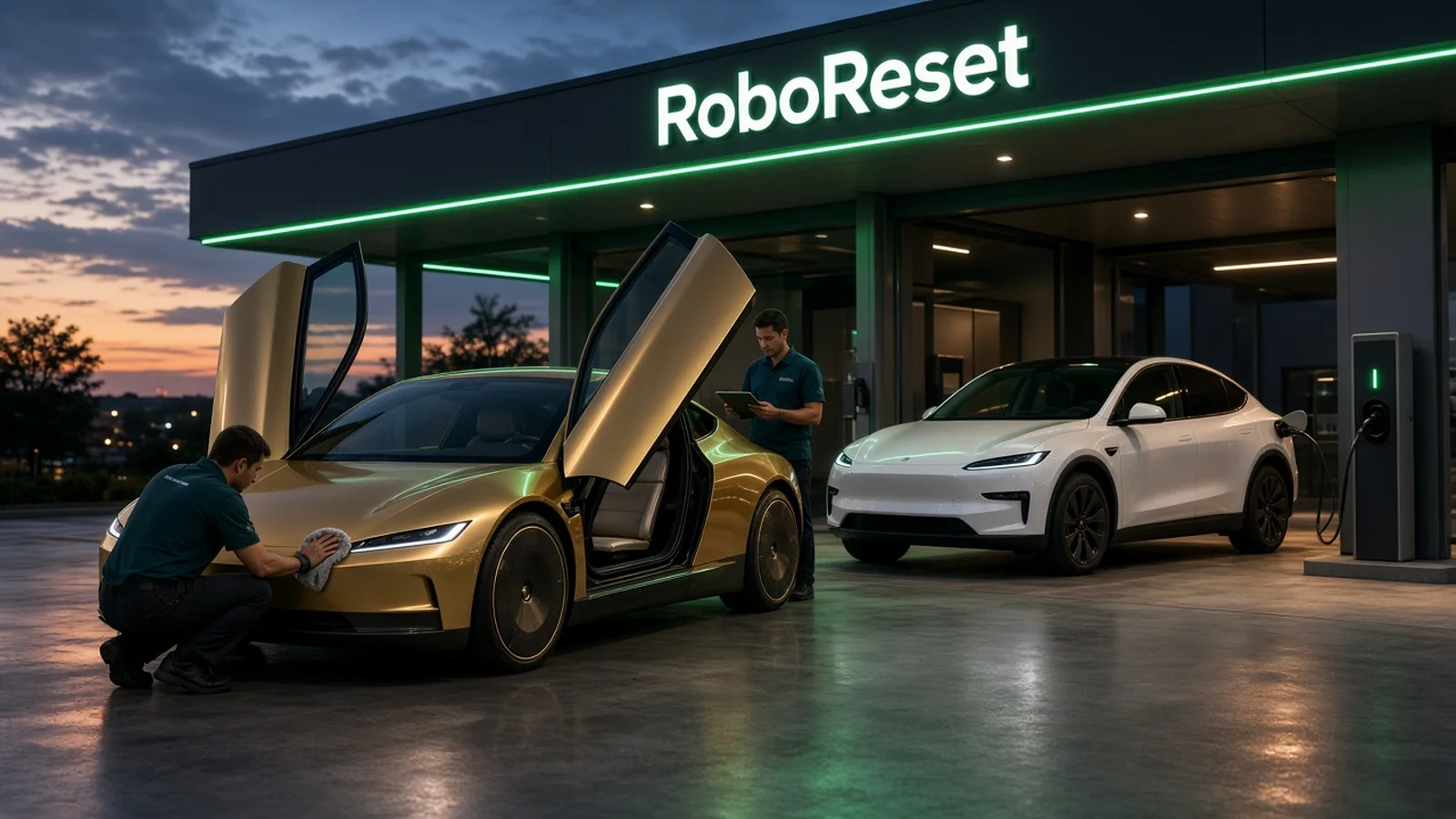
We originally started this project as RoboReset, with plans to build a dedicated robotaxi servicing depot in Austin.
Then we started working through the economics and logistics.
Using current Austin-area commercial rents, potential existing industrial facilities, charging infrastructure, equipment and staffing requirements, our preliminary modeling suggested that even a relatively modest depot supporting around 100 vehicles could require $600,000 to $1.5 million or more in startup investment, depending heavily on the site and its existing infrastructure.
That's not necessarily a large investment for a well-capitalized fleet operator. But it's only one facility, serving a limited geographic area. A fleet spread across a major metropolitan market could require several locations to keep service times and empty miles under control.
And that raised another question.
Does it make sense to send a vehicle across town to a central depot for a five-minute cleaning or a tire repair?
Sometimes, sure. But probably not every time.
Every mile traveled without a paying passenger adds cost, takes time and reduces the vehicle's earning potential.
So we started looking at a different model.
What if existing tire shops, car washes, detailers, parking facilities and charging locations could become part of a coordinated robotaxi service network?
Many already have the space, equipment and people. They may only need some additional infrastructure, operating standards and a way to connect with fleet operators.
Rather than building a handful of large facilities and expecting vehicles to come to us, what if we could bring the services closer to the vehicles?
That's the direction we're pursuing.
Introducing AVxLink
AVxLink is being built to connect autonomous fleet operators with qualified local service providers.
Instead of building every depot ourselves, we're exploring a distributed network of existing businesses that can support autonomous vehicles where they're already operating.
We're also developing AVxCompliance, a separate service focused on licensing, permits, insurance tracking, renewals and other regulatory requirements.
That's familiar territory for me. I've spent years working in licensing, regulatory compliance and court-appointed receiverships in heavily regulated industries.
The autonomous vehicle industry presents a new set of challenges, but many of the underlying business and regulatory problems are ones we've spent years solving.
We're early. The industry is early. And there are still more unknowns than knowns.
That's part of what makes this interesting.
Let's compare notes
We're interested in talking with two groups of people.
Future fleet owners: Whether you're considering your first Cybercab or planning a fleet of hundreds, we'd like to understand what you're building and what services you'll need.
Potential service partners: If you operate a tire shop, car wash, detailing business, repair facility, charging site or have underutilized commercial parking space, we'd like to hear from you too.
We're not asking anyone to make an investment or sign up for something that doesn't exist yet. We're starting conversations, building relationships and figuring out what this network needs to look like.
If you're working on something in this space, start a conversation with us.
We'll use this newsletter to share industry developments, the numbers we're working through, questions we're trying to answer and what we're learning along the way.
Next issue: What does it actually cost to keep a robotaxi on the road for a year? We'll break down the numbers, where the money goes, and which costs might be reduced as the industry scales.
There's a lot to figure out.
Andy Shelley
Founder, AVxLink
avxlink.com
Self-driving isn't self-servicing.