Research & Insights
← All researchTesla can build Cybercabs faster than it can put them to work
Texas now has more Cybercabs than robotaxi Model Ys, Tesla wants them in customers' hands by year-end, and the bottleneck has moved from the factory to the street.
By Andy Shelley -
The week in AV
Things moved fast again this week.
On October 27, Tesla's robotaxi fleet in Texas passed 1,000 registered vehicles, and for the first time Cybercabs outnumbered Model Ys: 544 to 507 in a midday snapshot of state registration records, with the Cybercab count reaching 573 by that evening. In late September it was 126. (EVwire)
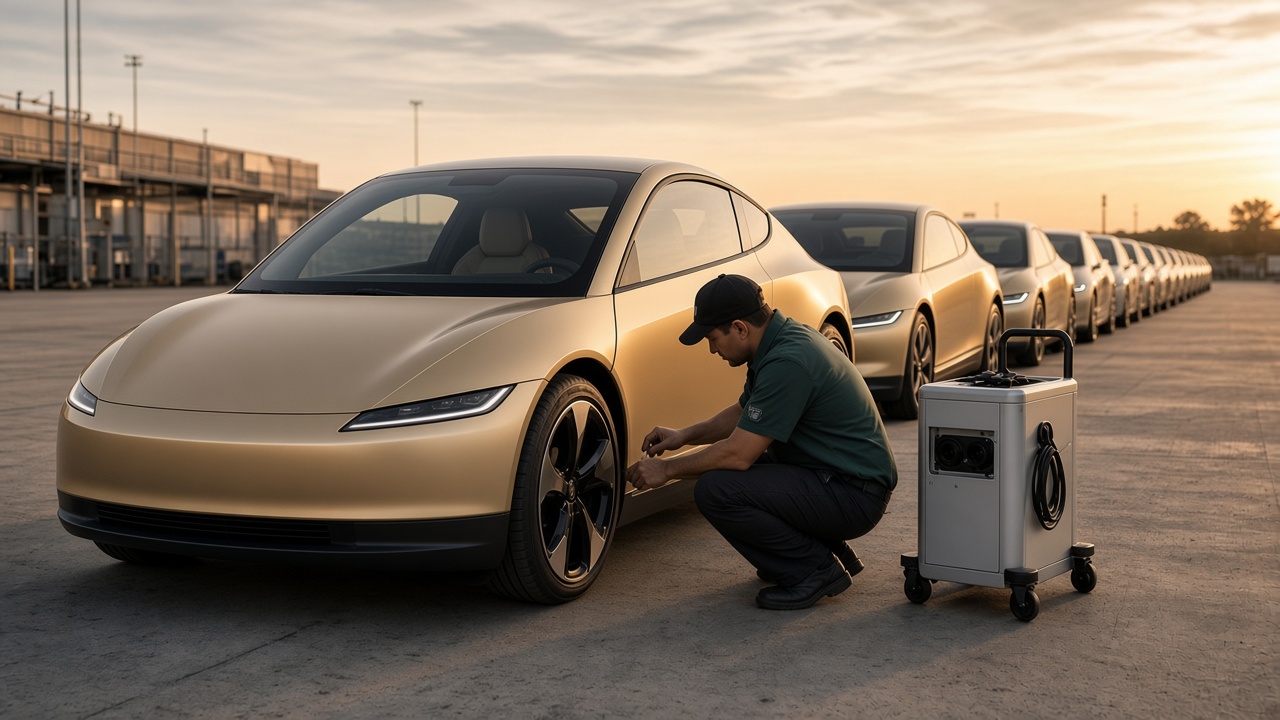
The bigger news came from Tesla's own engineering chief. In a factory tour with Munro Live, Lars Moravy said the Cybercab line doesn't even run every day, because "it's currently outpacing our deployments. ... Right now the manufacturing line's ahead." The car is designed to run at least 500,000 miles, and its battery is built so a single failed module can be swapped instead of the whole pack. (Teslarati)
Read that again. The factory isn't the bottleneck anymore. Deployment is.
And deployment is about to spread. On last week's earnings call Tesla said Cybercab rides launch in Dallas next month (TeslaNorth), and Moravy said Tesla is "trying to get Cybercabs to customers by the end of this year" (Reuters via Investing.com). Ashok Elluswamy added that the first customer-owned cars could join the robotaxi fleet around Q2 next year.
Waymo isn't standing still either. On October 27 it said it's adding nearly 250 square miles of service across Los Angeles, Nashville, Orlando, San Diego and the Bay Area (Waymo). It also leased a 65,000-square-foot building with an upgraded electrical service in Malden, Massachusetts, a state where driverless rides still aren't legal (Autonomous Boston). That's a company buying space for charging and service before it even has permission to drive.
The rulebook is catching up too. NHTSA drafted a rule for optional cyan "ADS marker lamps" that light up when a car is driving itself, with a 30-day public comment window once it's published (AutoGuide). And the agency's open review of how Tesla certified a car with no steering wheel, pedals or mirrors is still running (NHTSA).
Why this matters
Every one of those cars has to be charged, cleaned, inspected, fixed and kept legal, close to where it works.
Today Tesla owns every Cybercab it has built and services them itself. That changes when customers start buying them. An owner with five Cybercabs in Dallas won't have Tesla's depot. And as Waymo's Malden lease shows, even the biggest operator plans the service side before the rides.
Then there's the paperwork. Since May 28, 2026, any company running driverless vehicles commercially in Texas needs an authorization from the Texas DMV. That means certifying insurance, registration, a crash data recorder and federal compliance, filing a first-responder plan with DPS, and reporting material changes within 30 days. Personal use is exempt. (TxDMV)
What nobody has spelled out yet is who counts as the "operator" when a privately owned Cybercab earns money on Tesla's network. That's not a small question for a new owner.
What we're doing about it
AVxLink is building the local network these cars will need: tire shops, car washes and detailers, glass shops, charging sites, parking lots, mechanics and inspection stations, starting in Austin and following the fleets to Dallas. A car gets cleaned, charged or a new tire around the corner and goes right back to work, instead of driving empty across town to a depot.
AVxCompliance is working through the Texas authorization rules now, so owners who buy their first Cybercab know what they need on day one: registration, insurance, authorization, the first-responder plan, and who's responsible for each.
We don't have every answer yet. Nobody does. But the cars are being built faster than they can be deployed, and the people who sort out deployment first will matter.
If you're planning to buy a Cybercab, or you run a shop that could service one, let's compare notes.
Self-driving isn't self-servicing. Andy Shelley, Founder, AVxLink