Research & Insights
← All researchWaymo is going solo in Austin. That leaves three fleets — and a lot of local work.
Waymo will end Uber exclusivity in Austin and Atlanta in January 2028 and run through its own app. Tesla is already live. Uber is building its own multi-partner fleet. Three fleets still need cleaning, tires, glass, and charging near where they drive.
By Andy Shelley -
By Andy Shelley · Nov 9, 2026
The news
On November 4, Waymo co-CEO Tekedra Mawakana told Bloomberg that Waymo will end its exclusive Uber partnership in Austin and Atlanta starting in January 2028. Riders there will book through Waymo’s own app — the same model it already uses elsewhere. (InsideEVs; TechCrunch; Bloomberg / Emily Chang, The Circuit)
Her reason was blunt. Early on, Waymo partnered for scale. On Uber, a rider who wants a robotaxi doesn’t always get one — if none is nearby, the app can match a human driver. She called that “a little bit of a crapshoot.” Riders want a consistent relationship with the service.
Uber told Bloomberg it offered a dedicated robotaxi option so riders could match driverless cars more reliably. Waymo declined. Uber also told TechCrunch it still plans to host Waymo on its app for as long as both agree. So this ends exclusivity, not every Uber–Waymo link. The rider change still matters: by January 2028, Austin gets a first-party Waymo app alongside whatever else is on the road.
Waymo is already big elsewhere — more than 500,000 paid driverless trips a week across about 15 U.S. cities. (InsideEVs)
Austin already has three fleets forming
Look at Austin today, not 2028.
Tesla Robotaxi is live here with unsupervised Model Ys and Cybercabs. Public Cybercab rides opened September 4, 2026. The service area just jumped again — trackers put Austin around 440 square miles as of November 9. (robotaxistats; EVwire)
Uber isn’t standing still. In its third-quarter remarks it said about 700 robotaxis on its platform by the end of 2026 and more than 2,000 by the end of 2027, with partners including Rivian, Lucid, Wayve, and others. (InsideEVs)
Waymo going first-party, Uber growing a multi-partner book, Tesla already carrying riders. By 2028 Austin is a three-fleet market, not a single-partner experiment.
What that means on the ground
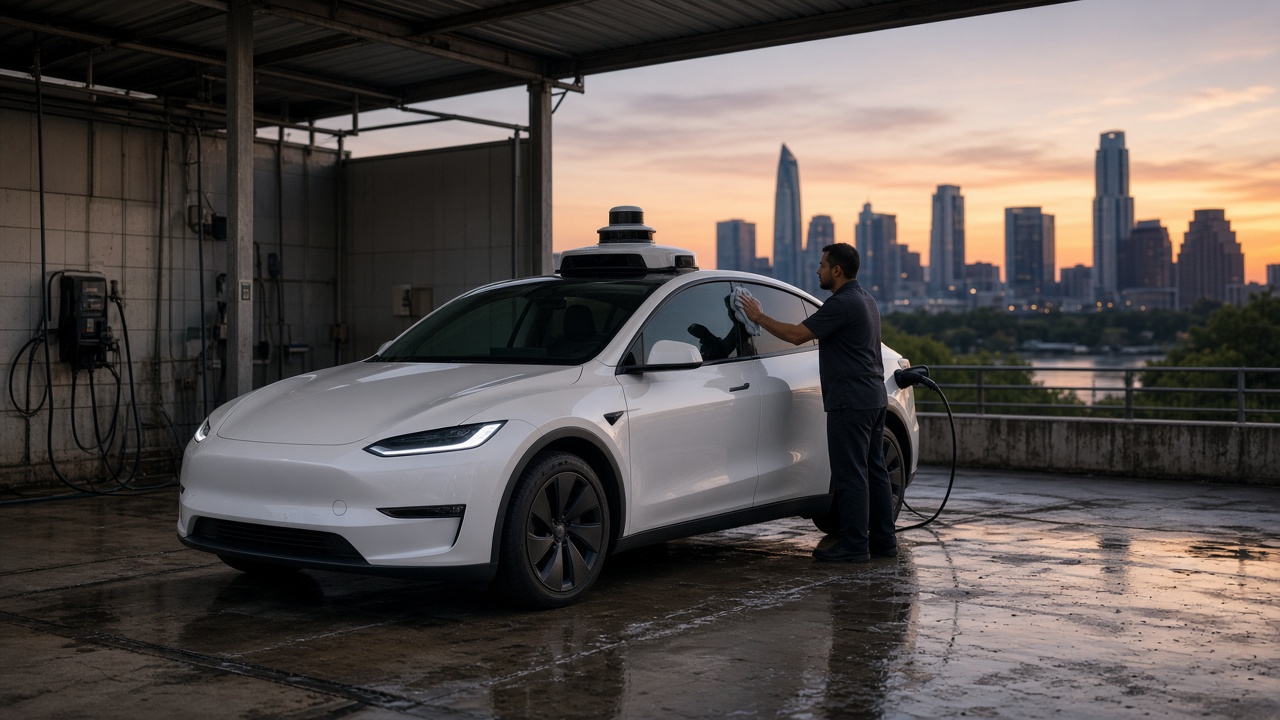
The part that gets less ink: who keeps those cars clean, charged, and ready.
When Waymo and Uber announced Austin and Atlanta in September 2024, the public deal was clear: Uber would manage and dispatch the Waymo fleet and handle fleet management — cleaning, repair, and other depot operations. Waymo kept the driver software, roadside assistance, and certain rider support. (Waymo)
That Uber-side ops stack is how Austin’s Waymos get turned between trips today. What Waymo will use instead once it runs a first-party app here in 2028 has not been spelled out. The safe read: the arrangement that put cleaning, repair, and depot work on Uber’s side will have to be rebuilt or rebid. Cars don’t stop needing a wash, a charge, tires, glass, and recovery because the booking app changed.
Separate fleets usually mean separate readiness rules. A Cybercab, a Jaguar I-PACE, and whatever Uber’s partners put on the street don’t share one back lot by default. They still need local shops close to where they drive — not empty miles across town for a five-minute cabin reset.
What we’re building
AVxLink is the local service partner network for that work: car washes, detailers, tire shops, glass, charging, parking, mechanics, inspection. We start inside the live geofences — Austin first — and grow with the fleets.
Self-driving isn’t self-servicing. Three fleets in one city only make that more true.
If you run a shop inside Austin’s robotaxi map and want fleet work — or you’re planning to own cars that will need that network — let’s talk.
Andy Shelley
Founder, AVxLink
avxlink.com
Assumptions and disclosure
This is independent analysis based on the public sources linked above. It is not a forecast and does not describe live AVxLink operations or customers. The January 2028 exclusivity change and Mawakana quotes are from Bloomberg’s November 4, 2026 interview (Emily Chang, The Circuit), as reported by InsideEVs, TechCrunch, and others. Uber’s continued hosting plans are from Uber’s statement to TechCrunch. Fleet-management language for Austin/Atlanta is from Waymo and Uber’s September 13, 2024 partnership announcement. Uber’s 700 / 2,000 robotaxi targets are from Uber’s Q3 2026 prepared remarks as reported by InsideEVs. Tesla Austin status, Cybercab public launch, and geofence size are from robotaxistats, EVwire, and TeslaNorth as of early November 2026. Waymo’s exact post-2028 fleet-ops plan for Austin and Atlanta has not been announced publicly; “rebuilt or rebid” is our reading of the published deal structure, not a company statement.